


Species Spotlight: Southeastern Pocket Gopher (Geomys pinetis)
by Dr. JT Pynne, Assistant Professor of Ecology at Emory University
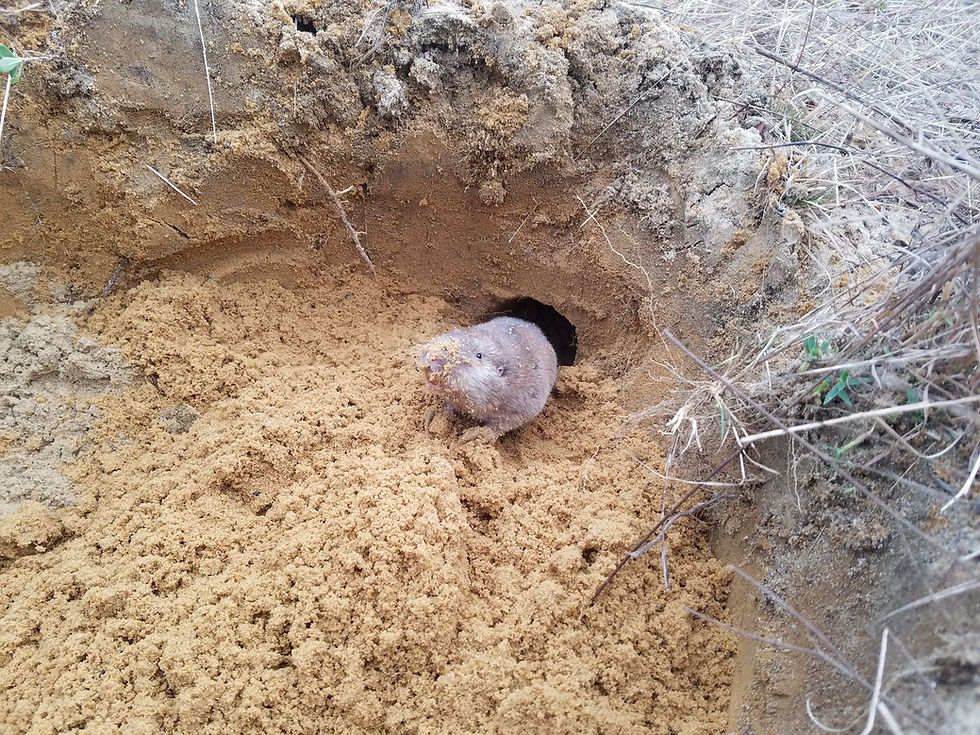
Photo by Dr. JT Pynne
Hidden engineers perform amazing work beneath our very feet, without us even noticing all the time. From burrowing beetles to gopher tortoises, many of these species go quite literally overlooked. One outstanding (and adorable in their own way) creature stands out among the rest. A true underdog of the pines, southeastern pocket gophers are named for their external, fur-lined cheek pouches used to carry food. Their species name, Geomys pinetis, translates to earth mouse of the pines, which makes perfect sense considering their subterranean behavior in pine forests. If you’ve ever walked across a sandy pine ridge and noticed fresh mounds of loose soil, like little volcanoes across the ground, you may have crossed paths with one of Georgia’s most secretive mammals. Pocket gophers are rarely seen, but their presence tells a story about the health of the land. For landowners across the Sandhills and down into the Coastal Plain, they’re a sign of intact sandy-loam soils, open pine habitat, and a functioning underground world that supports far more than meets the eye.
Despite the name, pocket gophers are only loosely related to the cartoon gophers, stuffed gophers on golf courses, or the Minnesota Golden Gophers (often woodchucks or ground squirrels). They are small, stout-bodied rodents specialized for life underground. They use their cheek pouches to carry roots and vegetation back to their burrows and the fur keeps the soil from sticking in there–nature’s version of reusable grocery bags. Their lips can even close behind their teeth to prevent soil from entering their mouth while they dig or chew on roots. It is estimated that they spend over 90% of their time underground, so they also have very strong forelimbs for digging, fur that rolls dirt right off, and reduced eyes and ears, though they can both hear and see.
Photos by Dr. JT Pynne
These are ecosystem engineers, keystone species, and indicator species, like gopher tortoises, because they alter their habitat and support a wide variety of other species, known as commensals. Anything that also uses this herbivores tunnel system is pretty protected because the tunnels are completely sealed off. We consider them indicator species because they let us know the quality of the soil and understory vegetation. Pocket gophers in Georgia are associated with savannas and grasslands, open pine forests with high biodiversity, and do not like much soil disturbance.
This indicator species is becoming more rare across their range, due to lack of fire and overcrowding forest canopies. They support many commensal species, many of which are rare like the gopher frog and several scarab beetles, and they conduct a range of ecosystem services which make for overall healthy forests such as soil aeration, soil nutrient mixing, and herbivory.
Next time you walk through an open pine forest, especially a longleaf pine forest, scan the ground and see if you happen see any kidney bean shaped soil mounds with no open hole, and rather fluffy soil. If you are lucky enough to spot one, you may have found one of our rare ecosystem engineers, and it might even be plucking roots right out from beneath your feet!


